

Continuous development instead of projects
After go-live we stay: maintenance, improvements and new requests in a steady rhythm. Software that grows with your business.
Four signs your software is standing still
- 1
The builder has left
The project was delivered, the supplier moved on. Every wish is a new quote and a new queue.
- 2
The wish list grows
Users know what could be better, but there is no rhythm to pick it up. The list gets longer, the software stays the same.
- 3
Updates are left waiting
Frameworks and packages age. Security updates are postponed because nobody knows what will break.
- 4
Nobody is responsible
An outage at eight in the morning. Who calls you? And who fixes it?
A partner who stays, in a steady rhythm
Steady development rhythm
Each period a set of improvements, planned with you. Small steps, always working software.
One point of contact
You know the team, the team knows your software. Questions, wishes and incidents in one place.
Maintenance and security
Monitoring, framework and package updates, backups and recovery. Before it becomes a problem.
Agreements that hold
Response times and availability set out in a maintenance agreement. Quarterly reporting.
View of the roadmap
What was done, what is planned and what it costs. No surprises on the invoice.
Growing with your business
A new integration, an extra role, a different process. The software follows your business.
Maintenance on what we built, or on what already runs
Maintenance and development
For everything we build: portals, integrations and apps. A fixed monthly fee for maintenance and a rhythm for development, tuned to your wishes.
Book a demoTaking over existing software
Is there an application whose builder has left? We assess the code, bring it up to standard and take over maintenance and development. With .NET we know every corner. With another technology we first check whether we can carry it well for years.
See examplesFrom first conversation to software that keeps growing
Analysis and concept
We start by understanding how your business works, what you want to digitise and why.
UX and technical design
We make sure it works logically for users and is technically sound.
Build, usually in .NET and Azure
Built securely and to scale, without frills. On .NET and Azure, or on the technology that fits your situation better.
Maintenance and development
We know your software and your process. Changes, updates and new requests are picked up in a steady rhythm.
Engagements that continue
All casesFrom an idea in a text message to a consumer platform in production
Enthusiasts of a niche hobby had no place to discover, rate and compare products. From a first message, through a prototype, to an app for real users.
Read the case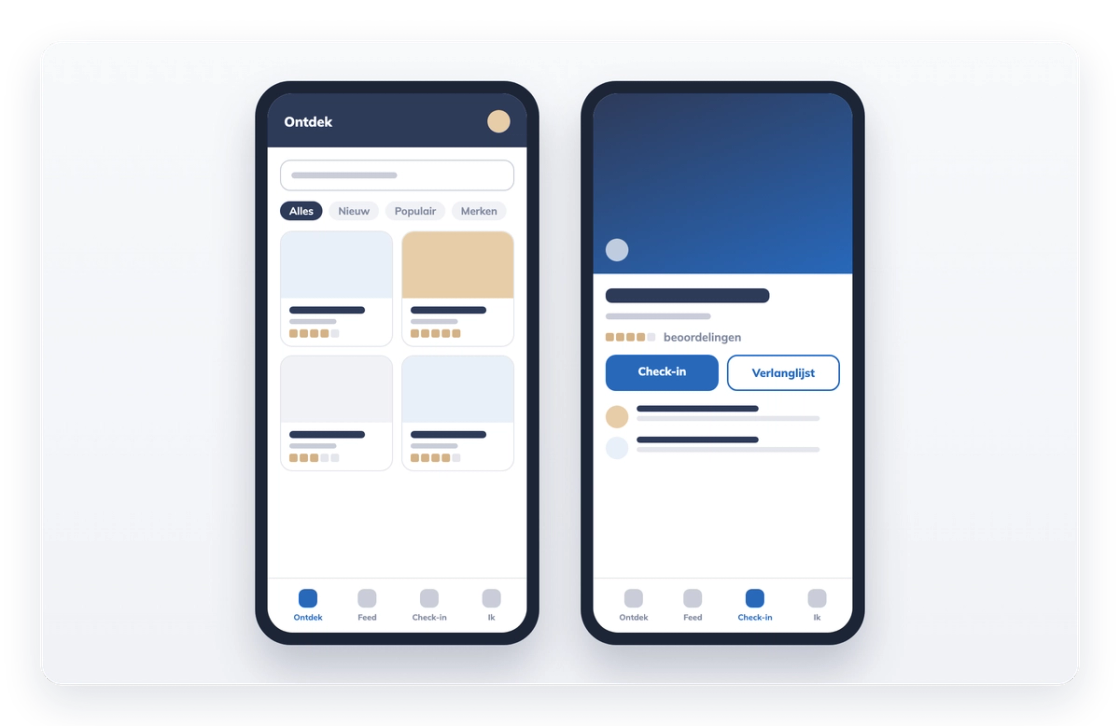
A steady development team alongside a financial services provider's own team
A financial services provider with its own platform and its own development team works with us for maintenance, support and building along on the roadmap.
Read the case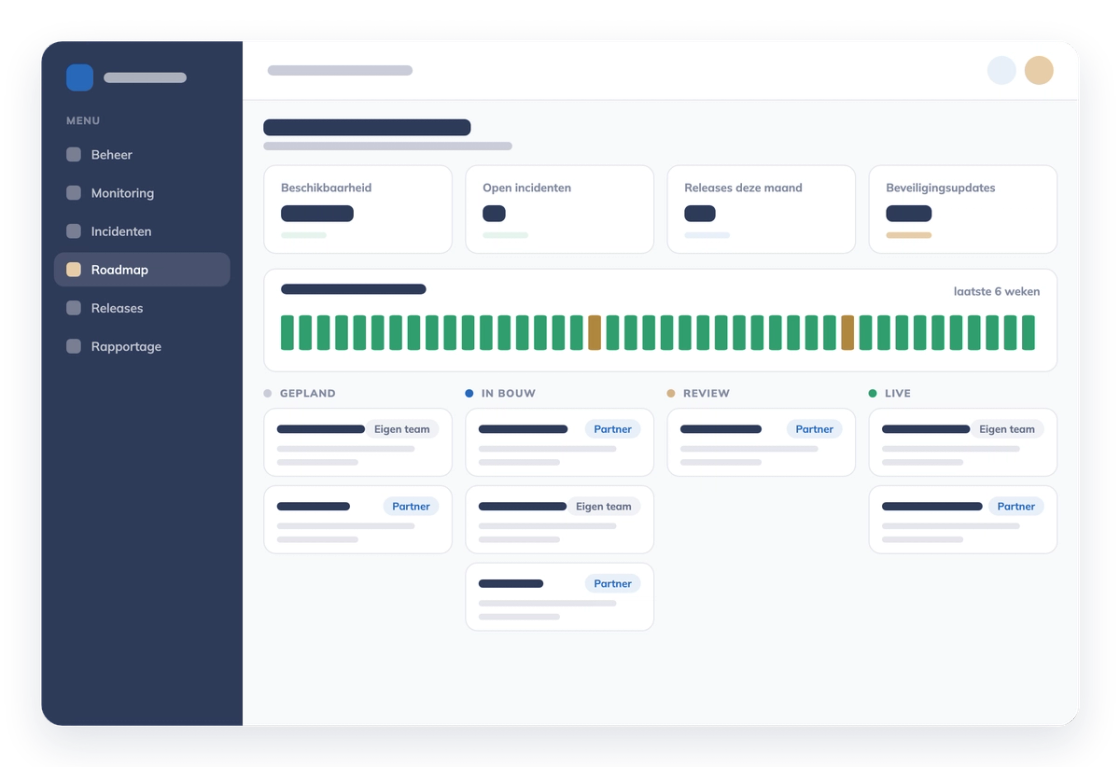
What should your software look like in two years?
Tell us what runs today and on which version. After a first conversation you know what maintenance and further development mean in your situation.